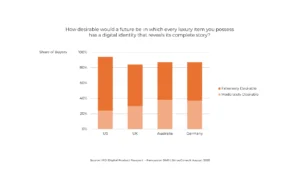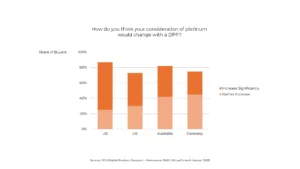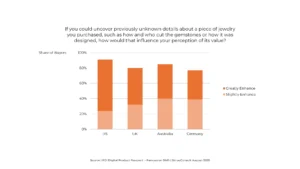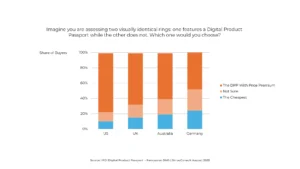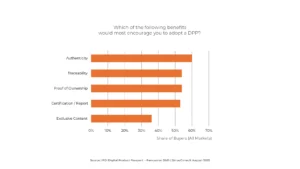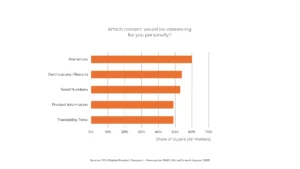
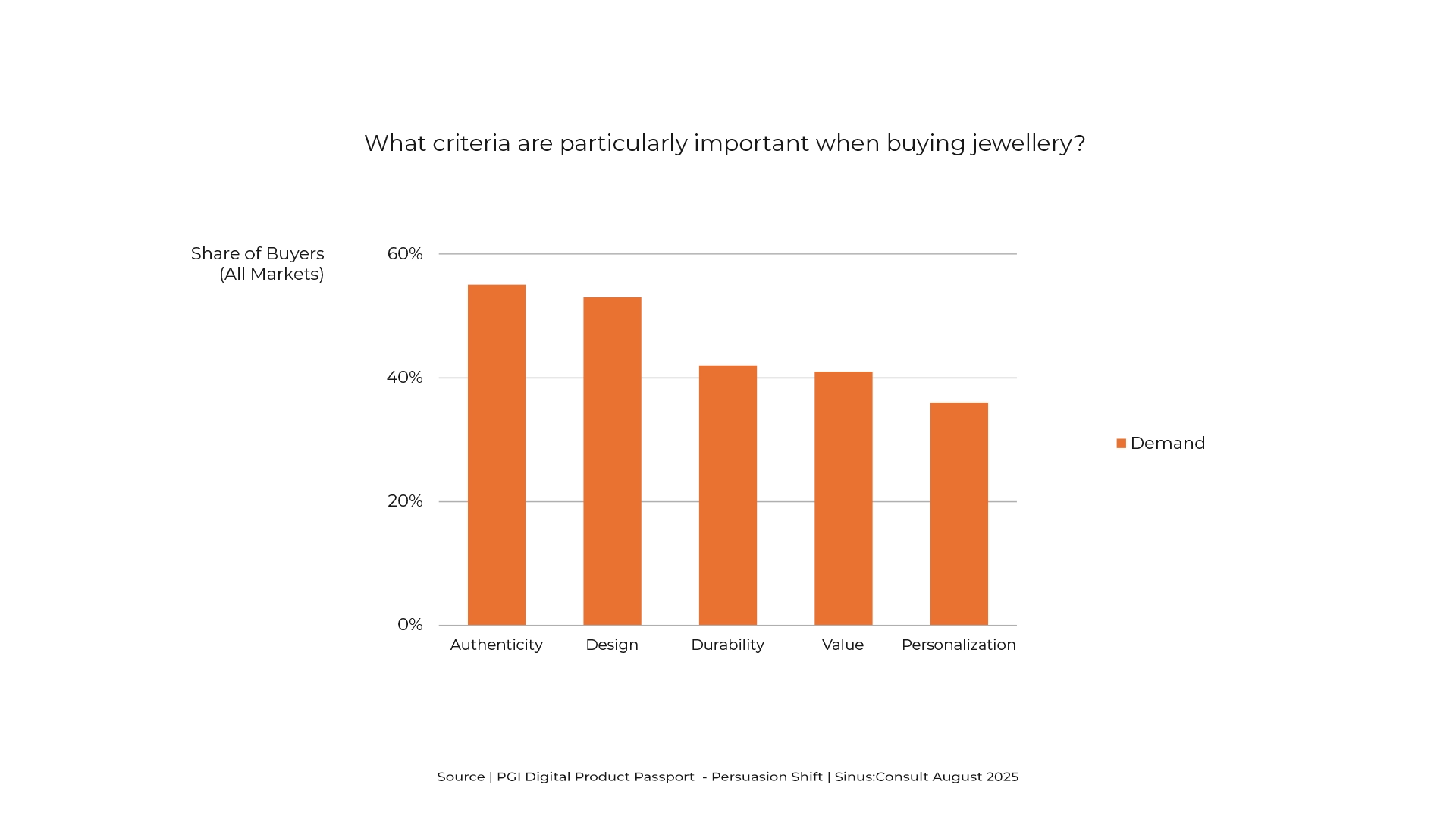
Product authenticity ranks as the top concern for jewellery buyers across all four surveyed markets including UK, USA, Australia, and Germany. Among consumers willing to spend over US$1,000 on jewellery, authenticity was named more frequently than any other factor when evaluating a purchase.
(Source: PGI Digital Product Passport – Persuasion Shift)
Interpretation
Buyers of high-value jewellery prioritise confidence in what they are buying. Concerns about counterfeits, misleading descriptions, or incomplete information are common, regardless of region. Authenticity is not simply desirable, it is expected.
Insight
Trust is the foundation of any high-value purchase, especially when it comes to items with emotional or symbolic significance like jewellery. Consumers want to feel reassured that their investment is genuine and ethically sourced.
Implication
Retailers and manufacturers who cannot clearly demonstrate authenticity risk losing credibility with discerning buyers. As expectations rise, the absence of verified product history may weaken purchase confidence and reduce conversion rates, particularly in higher price brackets.
Opportunity
Digital Product Passports offer a scalable and consistent way to validate authenticity at the point of sale. Providing a transparent digital record can immediately address buyer concerns and differentiate a product in a competitive market.
Recommendation
Review your product lines to identify where proof of authenticity is currently weak or undocumented. Begin piloting DPPs on platinum items over US$1,000 to provide a clear, traceable digital history that reinforces buyer confidence and supports premium positioning.